
Compare GPT Image 2 and Nano Banana with a Controlled Figure Trial
Keep the brief fixed and evaluate terminology, relationships, revisions and the actual delivered file.
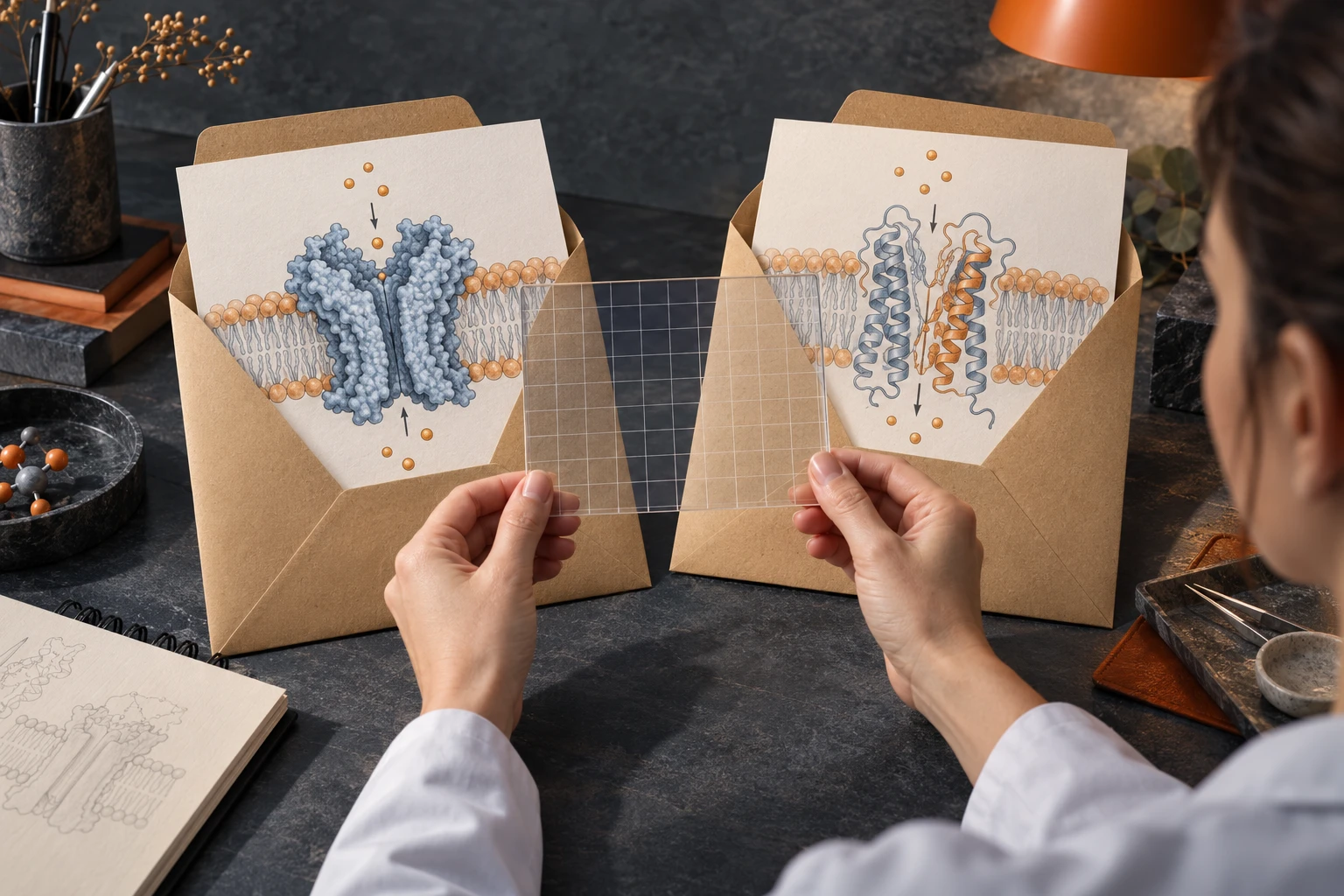
A model comparison should answer a narrow question: which tested configuration follows this brief and survives this revision? It should not turn two attractive samples into a claim of universal scientific accuracy.
Record exact identities first
OpenAI documents GPT Image 2 as an image generation/editing model. Google’s image-generation documentation covers the Nano Banana family and its variants. Record the exact API/model identifier actually used by your service; a family nickname is not a reproducible configuration.
Also log the date, prompt, reference order, requested settings and actual output dimensions. If the service does not expose a parameter, write “not exposed” rather than guessing it.
Freeze a deliberately checkable brief
Use a hypothetical mechanism, not an unsupported claim about a real pathway:
Draw four compartments from left to right: Input, Sensor, Relay, Output. Connect Input to Sensor, Sensor to Relay, and Relay to Output with right arrows. Add one inhibitory T-bar from Regulator to Relay above the main row. Labels must be exactly Input, Sensor, Relay, Output, Regulator. White background, flat blue shapes, orange regulator. No extra labels, numerical data or molecular identities.
This brief has five exact strings and four relationships. Write the expected relationships down before seeing either output.
Use a pass/fail table rather than a beauty score
| Check | Pass condition |
|---|---|
| Labels | All five strings are present and correct |
| Main flow | Three arrows join the specified compartments in order |
| Inhibition | T-bar ends at Relay, not Sensor |
| Extra content | No invented identities or quantitative claims |
| Revision | Only the requested label changes |
Keep aesthetic clarity as a separate note. Do not award scientific credit for shadows, saturation or an impressive-looking molecule that the brief never requested.
Test the same revision
For each draft request: “Replace Output with Response. Preserve every other label, arrow and position.” Compare the full image, including regions outside the edited label. Record unintended changes and any additional attempts.
Run several paired trials if your budget permits, using the same input for each pair. For a hypothetical three-pair trial with 2/3 complete passes, report exactly that count; do not present it as a general accuracy rate. No benchmark results are claimed in this article.
Inspect the delivered file, not the request label
A requested 4K setting is not proof of returned native 4K. Read the actual width and height. A PNG is a raster image; wrapping it in SVG does not turn labels into text objects. Evaluate any conversion or editable export separately from the model trial.
Publish accepted and rejected examples with their inputs and limitations. The useful result is a documented decision for one figure task, with scientific review still required for the eventual research content.